
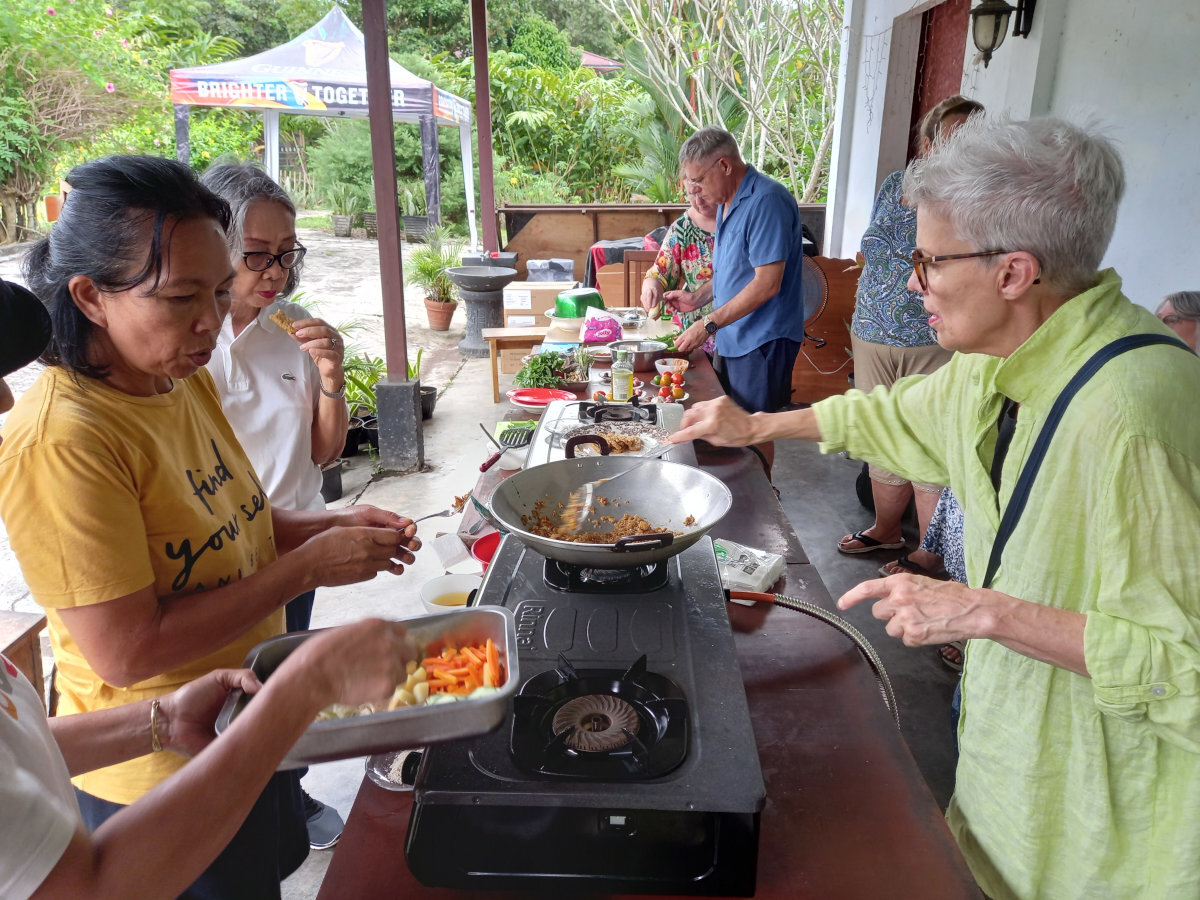
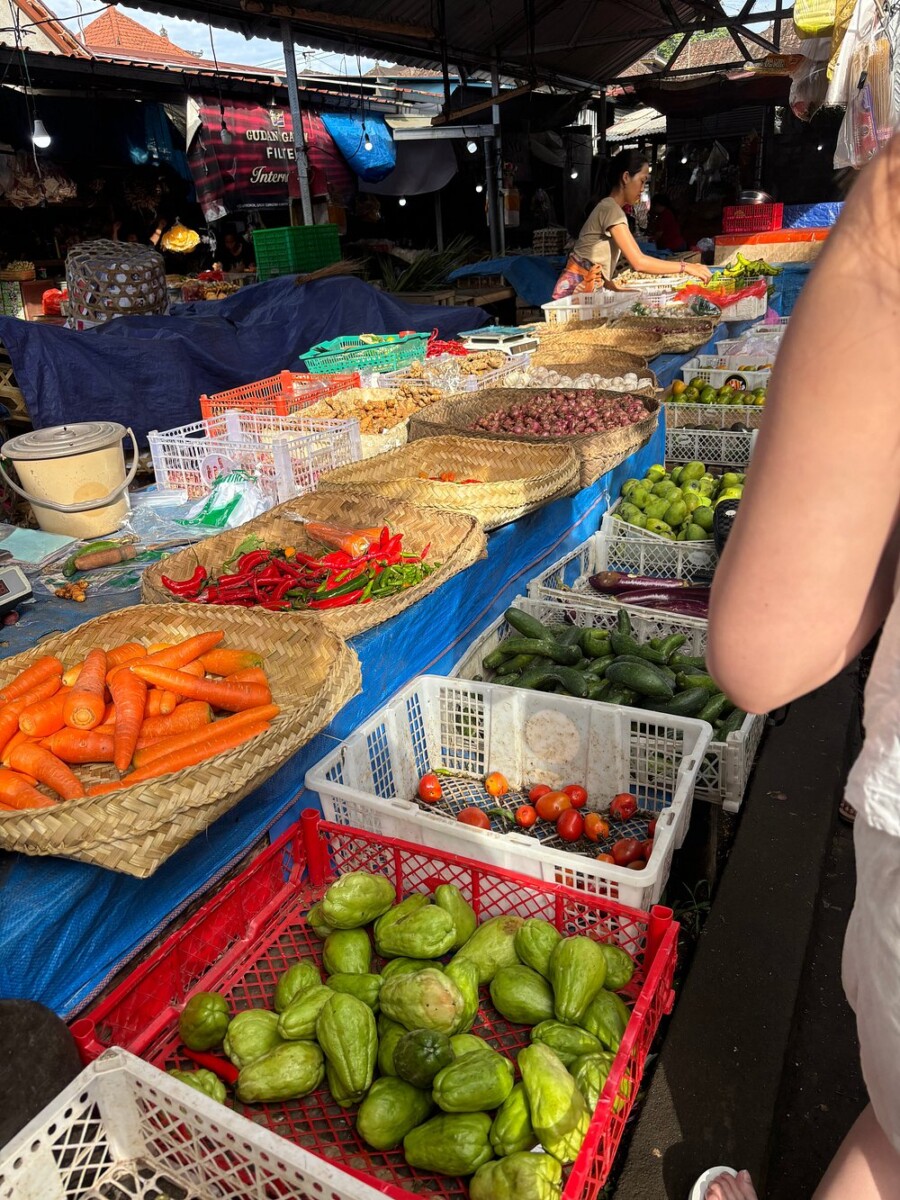
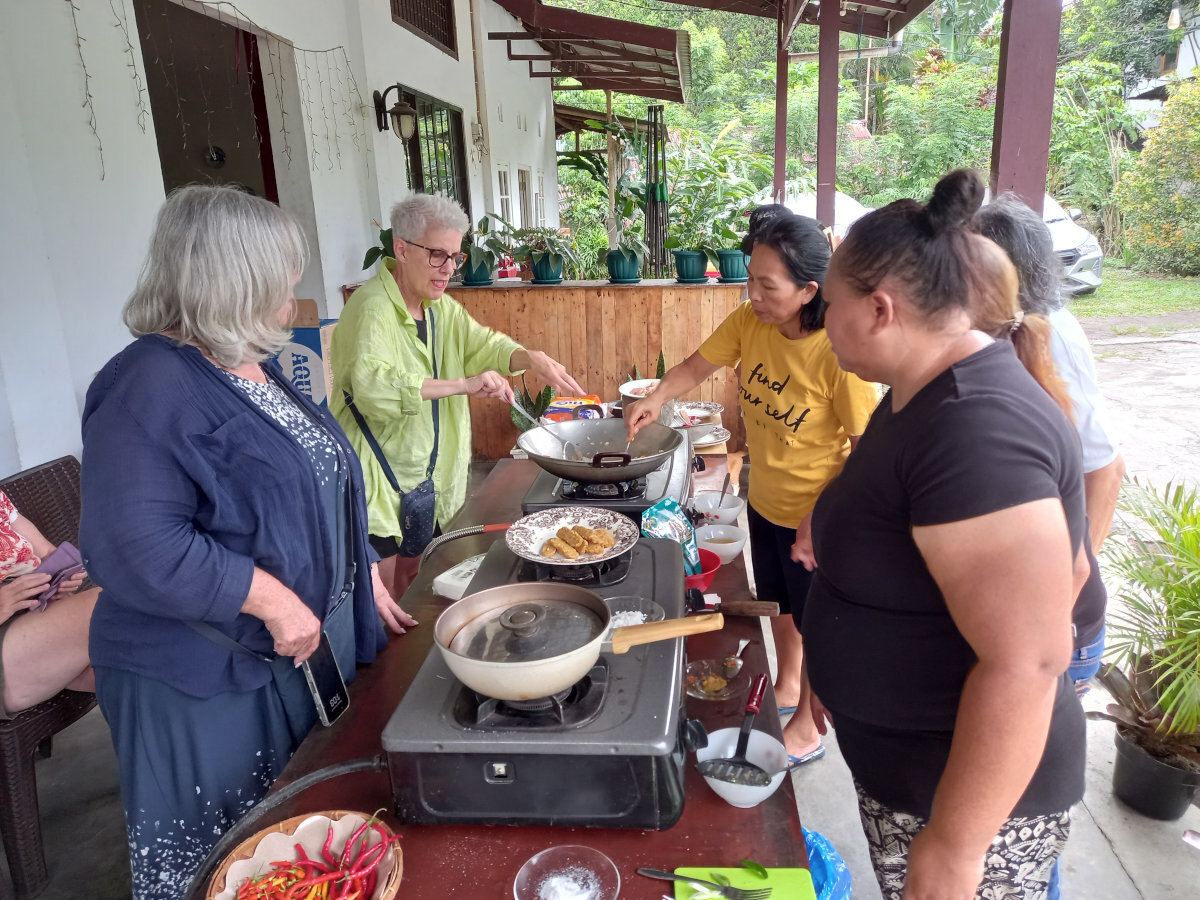
Your morning starts with a trip to the local markets to purchase all the freshest ingredients, herbs and spices for your class. Stroll around and enjoy the atmosphere and we will stop for morning coffee with local cakes. Then we head to the kitchen where you will find out we were named the “Spice Islands”. And then the best bit…. sitting down with a cool drink and enjoying the food you have just cooked!

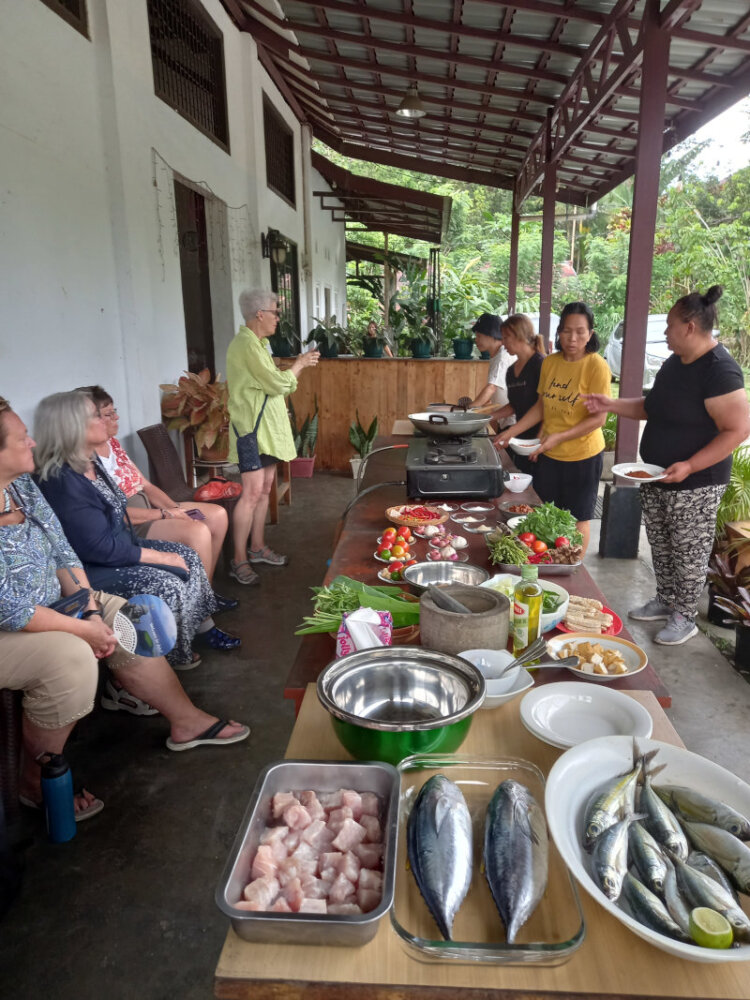
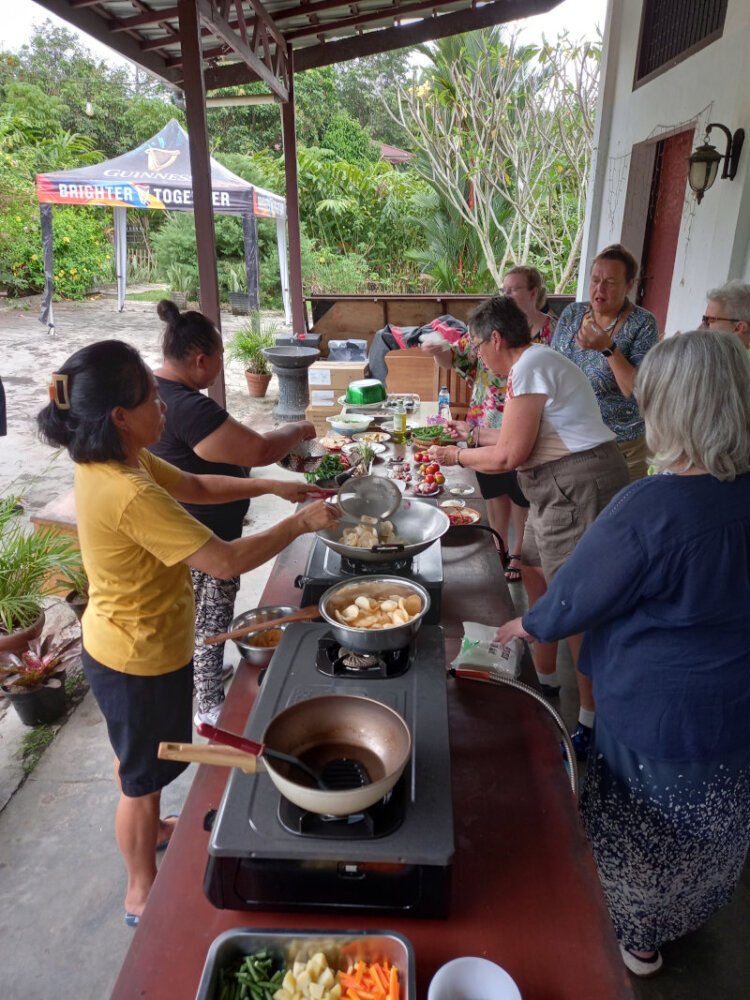
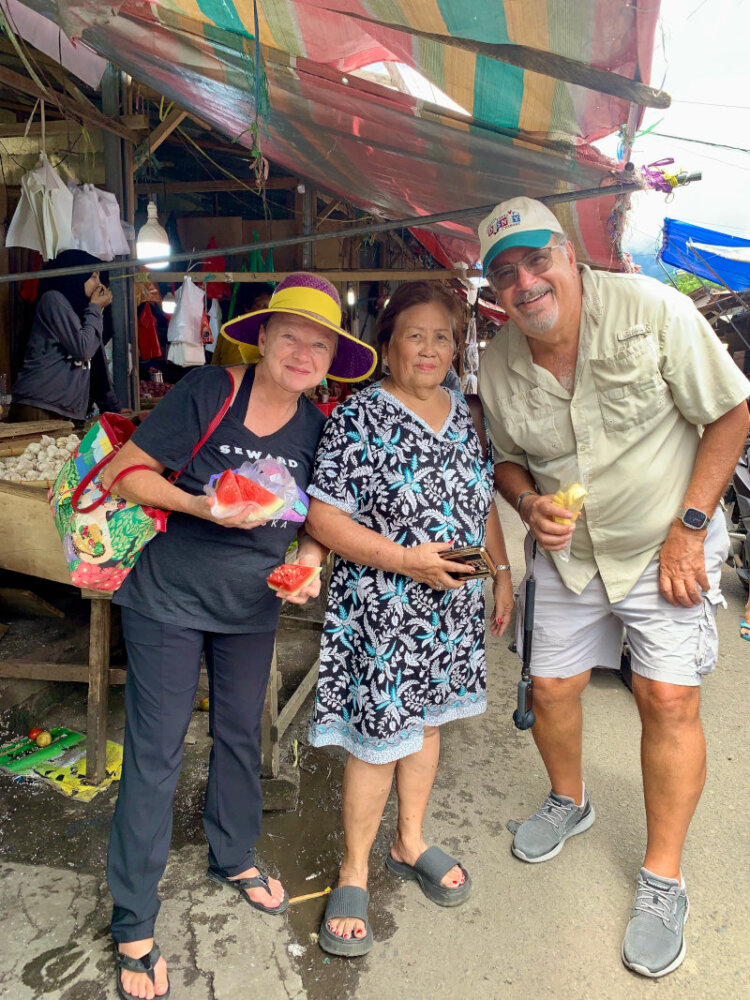
Recipes from Nomita & Seyli
Indonesian sweet soy sauce chicken (aka Ayam Kecap Manis)
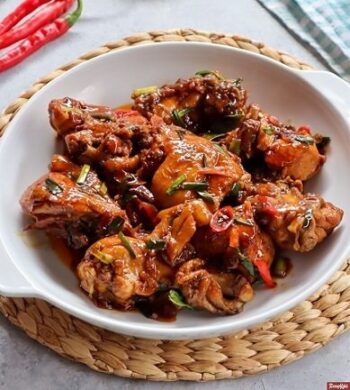
This Ayam Kecap Manis, the chicken is succulent with a sticky and slightly spicy sweet soy sauce all over it.
Alternatives for the sauce
If you can not get Indonesian sweet soy sauce, you can try to substitute it with a mix of dark soy sauce with either honey or dark brown sugar. For this recipe, you can use ¼ cup / 60 ml of dark soy sauce with 2 tablespoons of honey of dark soft brown sugar.
Ingredients
- 1 ¾ pounds chicken. Boneless or with bones. Cut in pieces.
- 3 tablespoons tamarind juice
- 1 teaspoon salt for the marinade.
- 2 onion medium size. Sliced
- 2 cloves garlic Finely sliced
- 1/2 teaspoon coarse black pepper
- 1/3 cup Indonesian sweet soy sauce see the note.
- Cooking oil
How to make Indonesian sweet soy chicken
Rooted in my mom’s recipe, this Indonesian Ayam Kecap is so easy to make. If you like a sweet and spicy flavor, then this recipe will be your next favorite stir-fry dish.
Here’s I make it.
1. Marinate
Prepare the chicken and pierce all over it with a skewer or a fork. This little trick helps the flavoring go right inside the meat. And I always do this whenever I cook chicken, meat or fish. Because I find this little step makes a huge difference in the taste.
Next, add 1 tablespoons of lemon/lime juice and one teaspoon of salt to the poultry and toss well. Let it rest for at least 20 minutes.
2. Fry the chicken
When you’re ready to make the dish, cook the chicken by either deep-frying it or steam-frying it. To steam-fry, you heat 2 tablespoons of oil on a frying pan with the lid. Then, place the chicken pieces on the pan and cook at moderate heat until the poultry looks opaque. Cover the pan and lower the heat. Let the chicken cook for about 10-15 minutes until it’s cooked through. Set aside.
3. Make the sauce
Heat the oil on a large frying pan/ wok. Fry the sliced onions until lightly golden, then add in the garlic and chili slices. Continue cooking until it releases an aroma.
Pour the sauce into the onion, followed by ground pepper and salt. Cook further for about 5 minutes until all the chicken pieces absorb the sauce and are well-coated with the sticky sauce.
Gado-Gado
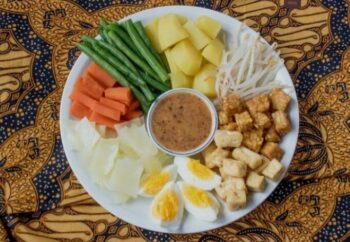
Gado-gado is an Indonesian salad made with several steamed vegetables and also accompanied by hard-boiled eggs, boiled potatoes, fried tofu, tempe, as well as chopped lontong or ketupat (rice cake), served with a spicy peanut sauce dressing.
Ingredients (serving 4 people)
- 200g green beans (or asparagus beans), cut into 5cm pieces and blanched
- 200g soybean sprouts, blanched
- 200g white cabbage, sliced and blanched
- 4 hard-boiled eggs, cut into quarters
- 4 small cucumbers, sliced
- 300g firm tofu
- 300g tempeh (only if available)
- 2 potatoes, boiled and diced (optional)
- Lontong or rice cake (optional) Krupuk or emping (crackers, optional)
For peanut sauce:
- 300g peanuts (no salt)
- 5 garlic cloves, peeled
- 2 red chillies, seeded and chopped
- 60g palm sugar/brown sugar
- 1 tablespoon tamarind extract
- Juice of 1 lime
- Salt
Preparation
Step 1: Blanch all vegetables: briefly immerse them in boiling water, so that they don’t get fully cooked: let them boil for a few moments, bring them out with a foamer and pass them right away by cold water.
Step 2: Prepare the sauce by frying the peanuts in a hot pan with a tablespoon of oil. Stir frequently for a few minutes, until slightly brown.
Step 3: Mix peanuts, garlic and chilli with a mortar for a smooth paste.
Step 4: In a saucepan, combine the processed mixture with lemon juice and water (about 1 table spoon). Continue simmering to achieve the desired consistency, about 5 minutes. Remove from heat.
Step 5: Cut the tofu into 2 cm cubes. Fry the tofu in a frying pan with hot oil to lightly brown on all sides.
Step 6: Cut the tempeh and fry for a few minutes.
Step 7: Place all ingredients in a dish and serve with the peanut sauce on top.
👉 There are many variations of this same dish that you can make: just think about all the different types of vegetables you could use. Be creative and try to make your own version of Gado-Gado! 👌
Note: Peanut sauce can be substituted with peanut butter.
Nasi Goreng

Nasi Goreng is the popular Indonesian fried rice which is traditionally served with a fried egg. I love the unique dark brown, caramelised colour of the rice! It’s a simple recipe, you won’t need to hunt down any unusual ingredients, and it’s one of my favourite Indonesian foods – and I’m betting you will love it too. 🙂
Why You’ll Love It
It’s easy! If you don’t have day-old cooked rice in the fridge, a little trick I use is to cook some rice, spread it really thin on a sheet pan or plate, and throw it in the fridge for an hour or so. It’ll not only cool down the rice, but also dry it out enough so that it’ll work wonders in your fried rice. Everything cooks in the same pan. Yes, even the eggs! Those get scrambled right in the pan and cooked alongside the fried rice.
How to Make Fried Rice
Rice: Cold, leftover rice — preferably day-old cooked rice — is essential to a great fried rice. Freshly cooked rice is too fluffy and moist. You’ll want your rice to be as dry as possible, which ensures that the granules are separated to yield the right texture.
Eggs: A common addition to fried rice. These get scrambled into fluffy curds that are evenly distributed throughout.
Cook your veg. Stir-fry garlic, scallion whites, peas, and carrots in a large wok or nonstick frying pan.
Add the rice. Make sure to break up any clumps, toss to combine, and add your seasonings.
Scramble the eggs. Push the fried rice to one side of the pan, then add your eggs to the other side. The eggs are scrambled in the pan while they’re getting slowly cooked, and then folded into the fried rice to finish. (This technique is used in a lot of stir-fries and dry noodle dishes, and it’s really fun to do too!)
Finish the fried rice. Drizzle with sesame oil and garnish with scallion greens.
Tuna Woku
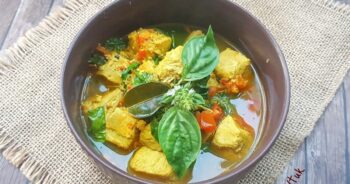
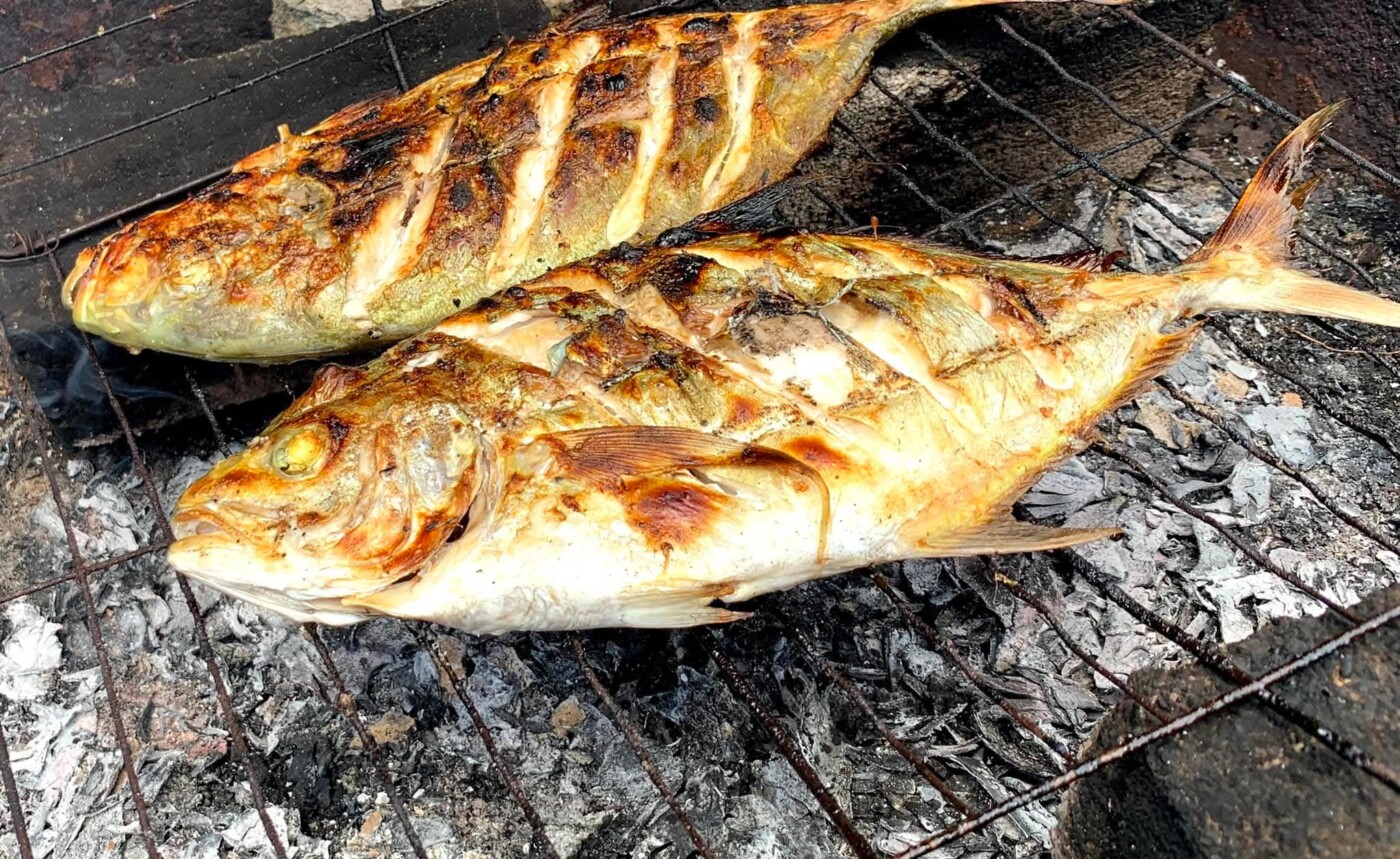
Tuna Woku is a signature Manadonese dish from North Sulawesi, Indonesia, known for its rich, spicy, and aromatic flavor profile. The “woku” refers to the style of cooking with abundant herbs and spices, which results in a fresh and vibrant fish curry. This recipe is for approximately 4-5 servings.
Ingredients
Tuna & Marinade:
500g tuna fillet, cut into chunks
1 tbsp lime or lemon juice
tsp salt
¼ tsp black pepper
Aromatic Herbs & Spices:
2 sticks (stalks) lemongrass (bruise)
8 leaves kaffir lime leaves
2 pandan leaves (optional)
1 turmeric leaf, sliced (optional, but recommended for authentic flavor)
2 stalks scallions, sliced
30g kemangi (lemon basil) leaves
1-2 buah (pieces) red tomato, cut into wedges
Ground Spice Paste:
10 shallots (bawang merah)
5 cloves garlic (bawang putih)
3 candlenuts (kemiri), optional
5 cm (2 in) ginger
5 cm (2 in) kunyit (turmeric)
17 green rawit chilies (bird’s eye), or to taste
Note: Adjust chili quantities based on desired spice level.
Other Ingredients:
Cooking oil (3 spoon)
350 ml water (or more for a soupier version)
½ tbsp chicken stock powder
½ tbsp seasoning powder (optional)
1 tsp sugar
Salt to taste
Cooking instructions
Marinate the tuna: Cut the tuna fillet into desired chunks. Marinate with lime juice, salt, and pepper for 10-15 minutes.
Prepare the spices: Blend or food process all the ground spice paste ingredients (shallots, garlic, candlenuts, ginger, turmeric, and chilies) until it forms a coarse paste.
Sauté the aromatics: Heat the oil in a pot or wok. Add the bruised lemongrass stalk, sliced pandan leaves, and kaffir lime leaves. Sauté until fragrant.
Cook the spice paste: Add the ground spice paste to the pot. Sauté until the paste is cooked, fragrant, and the oil separates.
Add tuna and seasonings: Incorporate the marinated tuna chunks, chicken stock powder, sugar, and any additional salt/seasoning. Stir gently to coat the fish with the spices and cook briefly until the fish changes color.
Simmer: Add the water and the tomato wedges. Bring to a simmer and cook for about 5-10 minutes, allowing the flavors to meld and the fish to cook through. Avoid overcooking to prevent the tuna from becoming tough. The sauce will reduce slightly.
Finish the dish: Turn off the heat. Stir in the sliced daun bawang (scallions) and the kemangi (lemon basil) leaves. Add a final squeeze of fresh lime juice for brightness.
Serve: Taste and adjust seasoning if necessary. Serve the tuna woku hot with steamed white rice.